
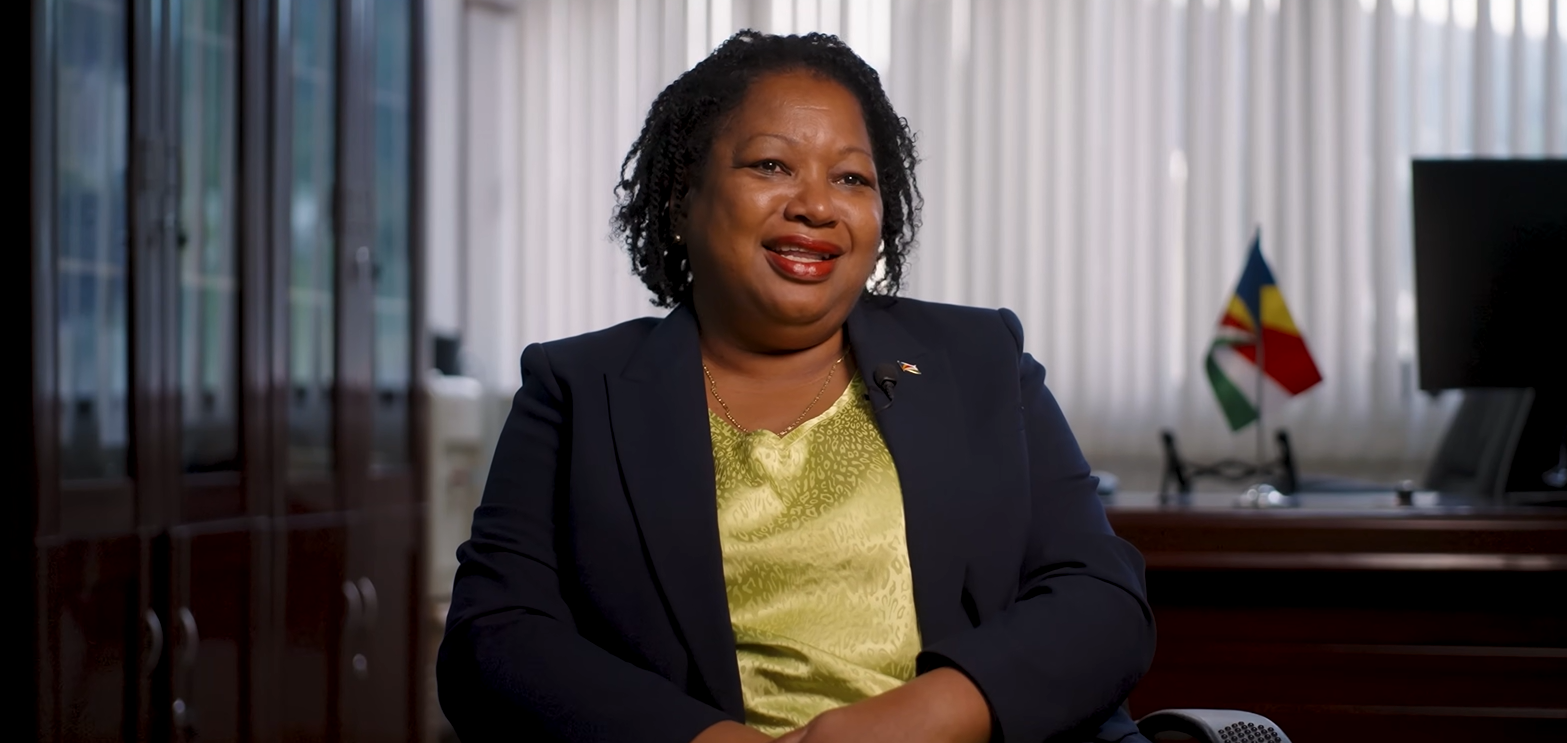
Seychelles has undergone remarkable economic and institutional development over the past five decades, evolving from a small island state into one of Africa’s increasingly recognized investment destinations, according to Anne Rosette, CEO of the Seychelles Investment Board (SIB). In this exclusive interview, Rosette outlines the country’s investment priorities, the reforms being introduced to make doing business easier, and the opportunities emerging across the blue economy, renewable energy, digital transformation, financial services, tourism, and aquaculture.
From Small Island State to Investment Destination
As Seychelles looks back on five decades of national development, Rosette describes a country that has transformed significantly in terms of its regulatory environment, policies, stability, and human capital.
“Seychelles has made remarkable development as a country over the last 50 years,” she says, describing its evolution from a small island state into a country increasingly recognized for its regulatory environment, policy framework, stability, and welcoming approach toward investors.
That development has also shaped the country’s approach to attracting foreign investment. Rather than opening every sector indiscriminately, Seychelles is increasingly seeking investment that aligns with its broader national development objectives.
Rosette says the investment opportunities being promoted are aligned with the country’s national development plan, with particular attention being given to the blue economy, renewable energy, digital transformation, financial services, and the development of human capital.
The strategy reflects a broader recognition that Seychelles must continue to transform alongside the global economy.
“As the world transforms, obviously, we have to transform as well,” Rosette says.
Making the Investor Journey Easier
One of the key priorities for Seychelles is making the process of investing and doing business more efficient.
Rosette acknowledges that administrative procedures and interactions with government can create barriers for investors, and says the country is working to reduce those burdens through digitalization and institutional reform.
The government has launched an e-government portal bringing a range of public services together, allowing investors and businesses to interact with government while facing fewer administrative obstacles.
There has also been work to streamline licensing and business registration processes, making them less stringent and less burdensome for businesses seeking to establish themselves in Seychelles.
For Rosette, this transformation is ultimately about making Seychelles more responsive to the needs of investors.
A New Investment Portal
The Seychelles Investment Board itself is undergoing a similar transformation.
Rosette says the SIB is putting in place an investment portal designed to facilitate the investor journey, particularly once projects have been submitted for government approval or referred to the relevant agencies.
The objective is to create a more coordinated process in which investors can navigate the different stages of their projects more efficiently.
The initiative forms part of a wider effort by the Investment Board to improve the way it delivers services, with faster responses and greater transparency becoming increasingly important as Seychelles competes for international investment.
Rosette also emphasizes that technology is only one part of the equation. Developing the capabilities of the people working within the institution remains equally important.
The SIB has therefore continued investing in training and professional development for its team, with the aim of improving both the quality of its services and its ability to engage directly with investors.
By the end of the year, she expects these initiatives to bring the Investment Board significantly closer to investors and their needs.
Sustainable Tourism and Economic Value Addition
Tourism remains one of Seychelles’ strongest economic sectors. But Rosette says the country is increasingly focused on making tourism more sustainable while creating greater value from the services it provides.
The objective is not simply to grow visitor numbers, but to improve the quality and value of the tourism offering.
Seychelles is also looking at how digitalization can support this transformation, including through easier interactions between businesses and government.
At the same time, Rosette points to the development of fintech and new financial services products as another area that can support the country’s economic transformation.
The combination of digital government, financial innovation, and value-added services is intended to create an investment environment that is better adapted to the changing global economy.
Aquaculture and the Sustainable Use of Resources
Aquaculture is another emerging opportunity identified by the Seychelles Investment Board.
Rosette says the country is looking for projects that can contribute to the development of the sector while ensuring that Seychelles’ natural resources remain protected.
This balance between investment and conservation is central to the country’s broader development strategy. Seychelles’ natural environment is one of its most important economic assets, meaning that new activities must be developed in a way that protects the resources on which future growth depends.
For investors, the opportunity therefore lies in developing new economic activities while contributing to the sustainable management of the country’s marine resources.
A Safe and Well-Regulated Investment Environment
Rosette also highlights Seychelles’ broader value proposition as an investment destination.
Strategic location, stability, safety, and a strong legal and regulatory environment are among the characteristics she believes provide investors with confidence.
“It is a country where it’s strategically located. It’s a safe country, the investment is safe” Anne Rosette, CEO of the Seychelles Investment Board
