

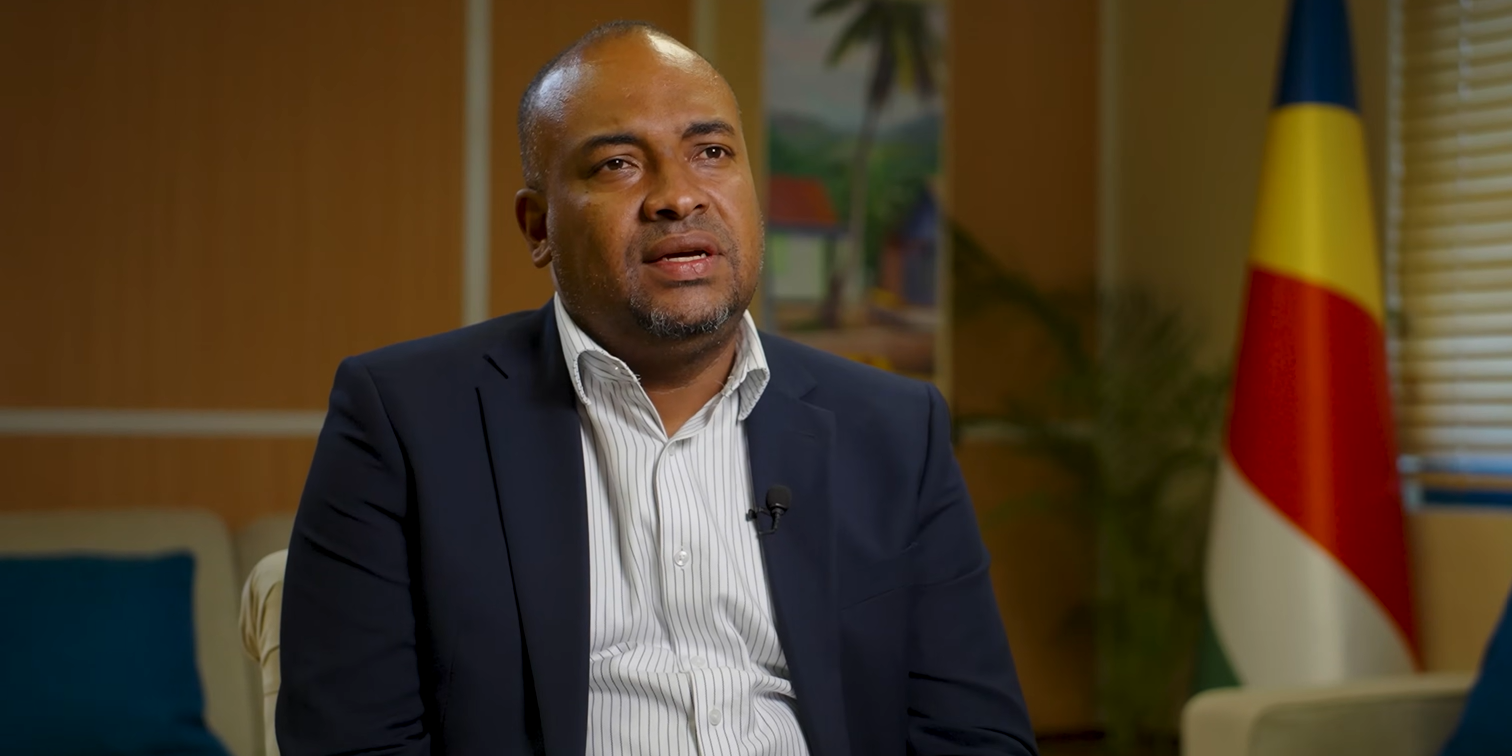
Seychelles is entering a new phase of economic development, with the blue economy emerging as a major frontier for investment, diversification, and sustainable growth, according to Hon. Wallace Cosgrow, Minister of Fisheries, Agriculture, and Blue Economy. In this exclusive interview, Cosgrow reflects on Seychelles’ economic evolution, the growing importance of fisheries and agriculture, and the opportunities available to investors as the country seeks to make greater use of its natural resources while protecting its fragile environment.
From a Traditional Economy to a Modern, Service-Oriented Nation
As Seychelles reflects on five decades of independence, Cosgrow sees a country that has undergone significant economic transformation. The economy has evolved from one that relied heavily on agriculture and fisheries into a more diversified, service-oriented economy in which tourism, fisheries, and financial services all play important roles.
“Seychelles has grown and has been able to achieve economic stability, economic development through an evolution of the economic sectors that have become more important over the years,” he explains.
For Cosgrow, this evolution has also been accompanied by an ability to adapt to technological change. Seychelles may be a small country, he says, but it has developed into a modern society prepared to embrace new technologies and new ways of doing business.
That capacity for adaptation is increasingly important as the country looks beyond its established economic pillars and toward new opportunities for growth.
The Blue Economy as Seychelles’ Next Frontier
Tourism remains the cornerstone of the Seychelles economy, but Cosgrow believes the blue economy represents the country’s next major frontier.
“The blue economy represents the next frontier, the future for Seychelles. Fisheries value addition in fisheries processing, aquaculture, big, big opportunities for Seychelles. We already have the legal framework. We already have the policies.” Hon. Wallace Cosgrow, Minister of Fisheries, Agriculture, and Blue Economy
