

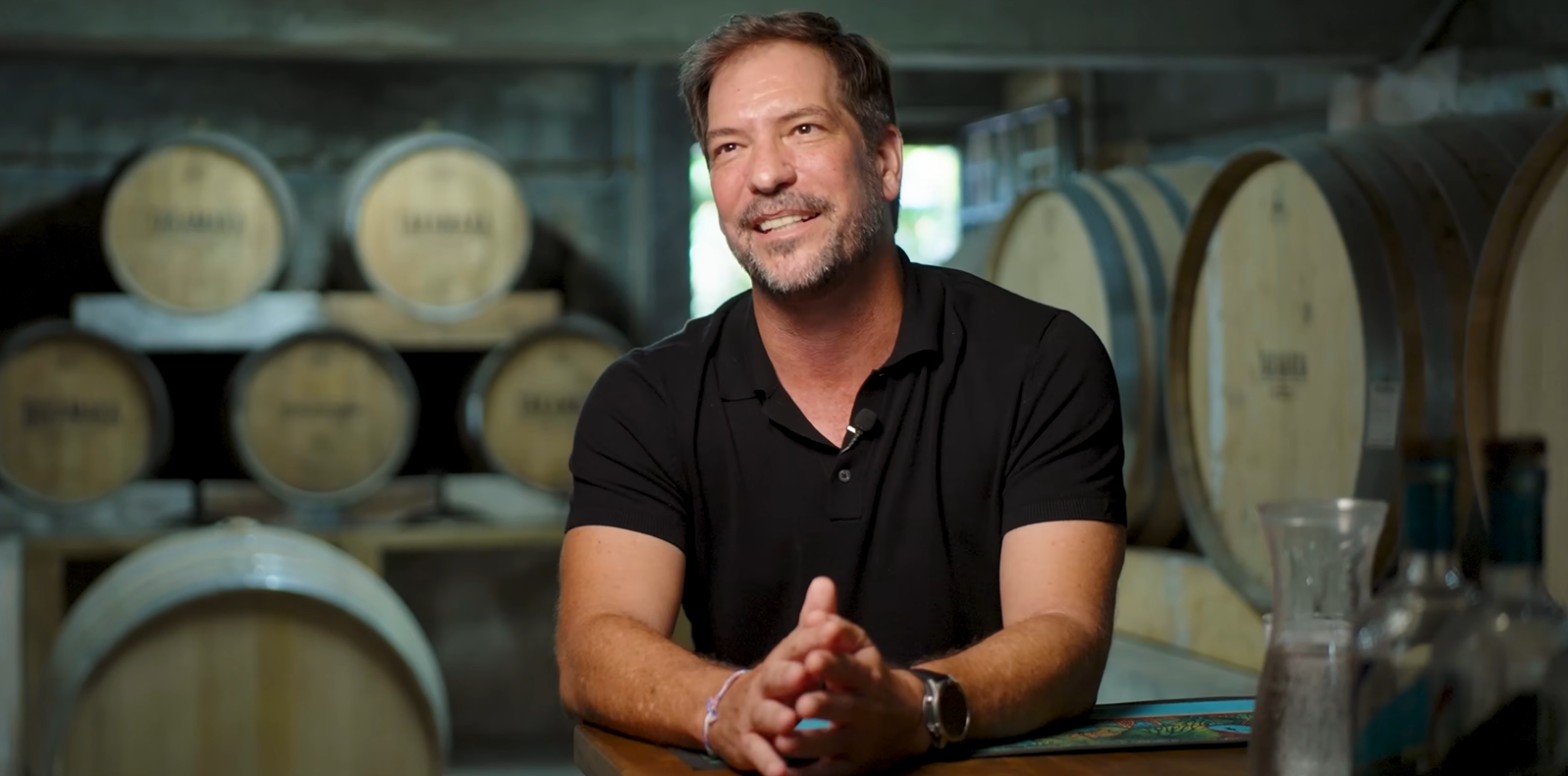
Seychelles has come a long way from being an economy primarily driven by tourism and fisheries, according to Richard D’Offay of Trois Frères Distilleries, the company behind the internationally recognized Takamaka rum brand. As the island nation celebrates 50 years of independence, D’Offay reflects on an economy that has matured, developed greater international reach, and demonstrated that a small country can build globally competitive products by focusing on quality, differentiation and value creation.
For D’Offay, the evolution of Seychelles can be seen through the growth of businesses such as Takamaka, which has expanded from a locally born brand into an international exporter. “Seychelles has matured and evolved as an economy,” he says. “As an example, with Takamaka having been in business 25 years now, we export to 60-odd countries, which 20 years ago would have been impossible.” For him, that international reach is evidence of how far the country’s private sector has developed.
A More Mature and Confident Economy
D’Offay believes Seychelles has built a stronger economic foundation over the past several decades, with increasing confidence among investors and businesses. While tourism and fish exports remain central to the economy, he sees a country that has become more capable of producing, exporting and competing internationally.
Fiscal discipline is another element he identifies as important to this confidence. “Our fiscal discipline is excellent,” he says, arguing that this contributes to the credibility Seychelles has developed among investors. In his view, the progress already achieved is only part of the story, with significant potential still ahead.
For a small island economy, that confidence is particularly important. Seychelles cannot compete with larger countries simply through scale, meaning its future competitiveness has to come from the quality and uniqueness of what it produces.
Value Addition as the Key to Growth
That is why D’Offay sees value addition as one of the most important opportunities for Seychelles over the coming years. With limited land and resources, the country cannot realistically compete with larger regional economies on volume. Instead, it can create greater economic value by transforming local resources into higher-value products capable of reaching international markets.
“Our focus, and I think as an industry, it’s really about value addition,” he explains. “The more we can add value and export that out of Seychelles, the more we can unlock any opportunities that are available within that space.”
For D’Offay, the principle is straightforward: Seychelles does not necessarily need to produce more raw materials; it needs to extract more value from what it already has. “It’s the value creation. The added value is where we can make a difference.”
This approach could apply across multiple sectors, particularly where Seychelles has a natural advantage or a distinctive origin story.
Competing Through Uniqueness, Not Scale
D’Offay acknowledges that Seychelles faces a significant disadvantage when compared with larger regional economies such as Mauritius and Réunion. Their greater land availability, infrastructure and production capacity allow them to compete in areas where Seychelles simply cannot achieve the same economies of scale.
But that does not mean Seychelles cannot compete.
Instead, D’Offay believes the country should concentrate on carefully selected, high-value opportunities. Agriculture provides a useful example. Seychelles is unlikely to produce crops such as cassava at industrial scale, but high-value products such as vanilla could offer a different proposition.
“It’ll just, you know, we just don’t have the resources outside of the blue economy,” he says, pointing instead to the opportunities created by high-value products and fisheries.
The country’s geographic origin can itself become part of that value. “Being able to differentiate yourself because our origin is so unique is a very exciting place to be,” he says. With the right products, customers and markets, he believes, “the sky’s the limit.”
Fisheries and the Blue Economy
While land-based production faces natural constraints, fisheries represents an area where Seychelles already possesses considerable regional strength.
D’Offay describes Seychelles as “the leading player within the region” in fisheries, highlighting the scale and importance of the country’s blue economy. The challenge now is to capture more of the value generated from those resources.
Rather than relying primarily on the export of basic commodities, greater processing, manufacturing and branding could allow Seychelles to generate more economic value domestically before products reach international markets.
That same principle lies behind the broader push toward value-added industries: use the resources that Seychelles has, but develop products and businesses capable of competing on quality rather than quantity.
Connectivity Remains a Critical Challenge
Despite Takamaka’s success in reaching international markets, D’Offay is candid about one of the major obstacles facing Seychelles: connectivity, particularly maritime connectivity.
Air connectivity is relatively strong, he says, but shipping presents a more difficult challenge for exporters. Limited choice among shipping lines can make outgoing cargo expensive and reduce the competitiveness of Seychelles-made products in international markets.
“The price of cargo outgoing is a real issue,” D’Offay explains. He attributes much of the problem to the limited number of shipping lines calling at Seychelles, which reduces competition and increases costs for exporters.
For businesses attempting to sell products internationally, this is more than a logistical inconvenience. Higher freight costs directly affect the final price of a product and can determine whether an exporter is competitive in a particular market.
Infrastructure That Can Unlock Export Potential
D’Offay sees planned development of Seychelles’ port infrastructure as an important opportunity to address some of these constraints. Larger vessels could eventually call at the islands, expanding the country’s options for international shipping.
But he stresses that major infrastructure projects take time. In the meantime, he believes that simply increasing the number of shipping lines serving Seychelles could have an immediate positive impact.
“Having more shipping lines call into Seychelles, having added competition will go a long way to making us a lot more attractive as an exporter,” he says.
For an economy increasingly interested in value-added production and international exports, improved maritime connectivity could therefore become an important component of the country’s wider growth strategy.
Sustainability as a Business Mindset
Sustainability is another area where D’Offay believes businesses need to look beyond individual initiatives.
While Seychelles has incentives encouraging renewable energy such as solar power, he argues that responsible sustainability has to become embedded throughout the way a business operates.
At Takamaka, he says, the company evaluates its activities “through the lens of sustainability.” If an activity is environmentally damaging or cannot be sustained, the company does not pursue it.
For D’Offay, this represents a broader change in how successful international businesses need to operate. Sustainability cannot simply mean installing solar panels or using electric vehicles. It has to become part of the underlying decision-making process.
“To live in that world of sustainability in a sustainable way for your industry is just sort of a mindset that you have to have as an international business today,” he says.
Twenty-Five Years of Takamaka
Takamaka’s own history mirrors, in many ways, the evolution of Seychelles itself.
The brand was born in Seychelles and has grown alongside the country. Owned by Seychellois interests, including D’Offay and his brother, the distillery has spent 25 years developing a product that has become strongly associated with the islands.
“Takamaka was really born in Seychelles,” D’Offay says. “As Seychelles has evolved, we have certainly evolved alongside it.”
That shared history has helped create something that goes beyond a conventional consumer relationship. For generations of Seychellois, Takamaka has become connected with memories, celebrations and experiences.
D’Offay describes the process as an emotional connection that develops over time. A person who encountered the brand at a party or social occasion years ago may later associate Takamaka with that memory, strengthening the relationship between the product and its home market.
“The longer you’re in the game, the more opportunity there is to make those connections with your customers,” he says.
A Brand That Remains Close to Its Roots
The company’s relationship with Seychelles is also reflected in the accessibility of the distillery itself. Visitors can come in, look around and experience the place without having to pay an entrance fee.
That openness contributes to the sense that Takamaka belongs not only to the company but also to the wider Seychellois community.
After 25 years, the brand has become an example of what can happen when a local company develops patiently, establishes a strong identity and then takes that identity into international markets.
Its growth also demonstrates the potential of Seychellois businesses to build products that are distinctly local while competing on a global stage.
Doing the Simple Things Well
Looking toward the next 25 years, D’Offay is less focused on dramatic transformation than on execution.
The company has plans for the next two and five years, but he believes sustainable growth starts with getting the fundamentals right every day.
“If you don’t do the normal day-to-day simple things perfectly, or to the best of your ability, if you are able to achieve doing the simple things really well, there’s sort of the future to a large extent takes care of itself,” he says.
For Takamaka, that means continuing to develop the business while maintaining a pipeline of interesting ideas and products so that the company is ready when new opportunities emerge.
It is an approach built around consistency rather than shortcuts: establish strong foundations, execute well, and remain prepared to take advantage of opportunities as they arise.
Passion Can Grow With the Business
D’Offay also offers a different perspective on entrepreneurship for young Seychellois.
Rather than believing that every entrepreneur needs to begin with a lifelong passion for a particular industry, he argues that passion can develop through the process of building something.
When Takamaka began, producing rum was not necessarily his greatest personal passion. What excited him was the opportunity to build a startup and see where it could go.
Over time, however, the desire to succeed, improve and perfect the craft grew alongside the business.
“In my experience, when you start to discover something and go down a road, then that passion and desire to succeed and desire to be the best in your business or perfect your craft sort of grows alongside,” he says.
His advice to young entrepreneurs is therefore pragmatic: identify a genuine commercial opportunity, make sure you have the ability to deliver it, and then pursue it.
“You will grow to love whatever you’re doing,” he says.
Building Global Businesses From a Small Island
Takamaka’s international footprint demonstrates what D’Offay believes Seychelles businesses can achieve when they combine local identity with global ambition.
Exporting to around 60 countries would have been difficult to imagine two decades ago, but the company has developed an international customer base while retaining its Seychellois identity.
That balance, being distinctly from Seychelles while operating successfully around the world, may be one of the country’s most valuable economic propositions.
For D’Offay, the objective is not for Seychelles to imitate larger economies. Its strength lies in identifying where its limited resources, unique origin and existing capabilities can produce something genuinely distinctive.
Seychelles Punches Above Its Weight
Ultimately, D’Offay believes the country’s greatest asset may be the combination of its natural environment, people and ability to create products with a strong sense of place.
“When a visitor comes to Seychelles for the first time, they just can’t believe how beautiful it is and how warm our people are and how much we have going for us as a small country,” he says.
“We punch way above our weight” Richard D’Offay of Trois Frères Distilleries, co-founder of Takamaka rum
