

Poland takes part in the G20 Leaders’ Summit in Miami (December 14–15) for the first time as a guest participant, and it already has a foothold there. The leaders working at the junction of Poland and South Florida explain how Polish companies are using the city as their gateway to the Americas.
“Miami represents more than an entry point into the United States. It is a strategic gateway to markets throughout Latin America and the Caribbean.” Ivan Barrios, President & CEO, World Trade Center Miami
A 3.3% expansion in 2025 (IMF Country Report, February 2026), among the fastest of the European Union’s large economies, has taken Poland to the edge of the world’s 20 largest, a place the Fund expects it to reach in nominal GDP by 2028. That economic weight now reaches a larger stage, the G20 Leaders’ Summit, whose host city, Miami, has spent decades positioning itself as the place where the world comes to do business with the Americas. The occasion could hardly be better matched: a country that keeps growing beyond its strong footprint in Europe finds in Miami an open door to the Americas.
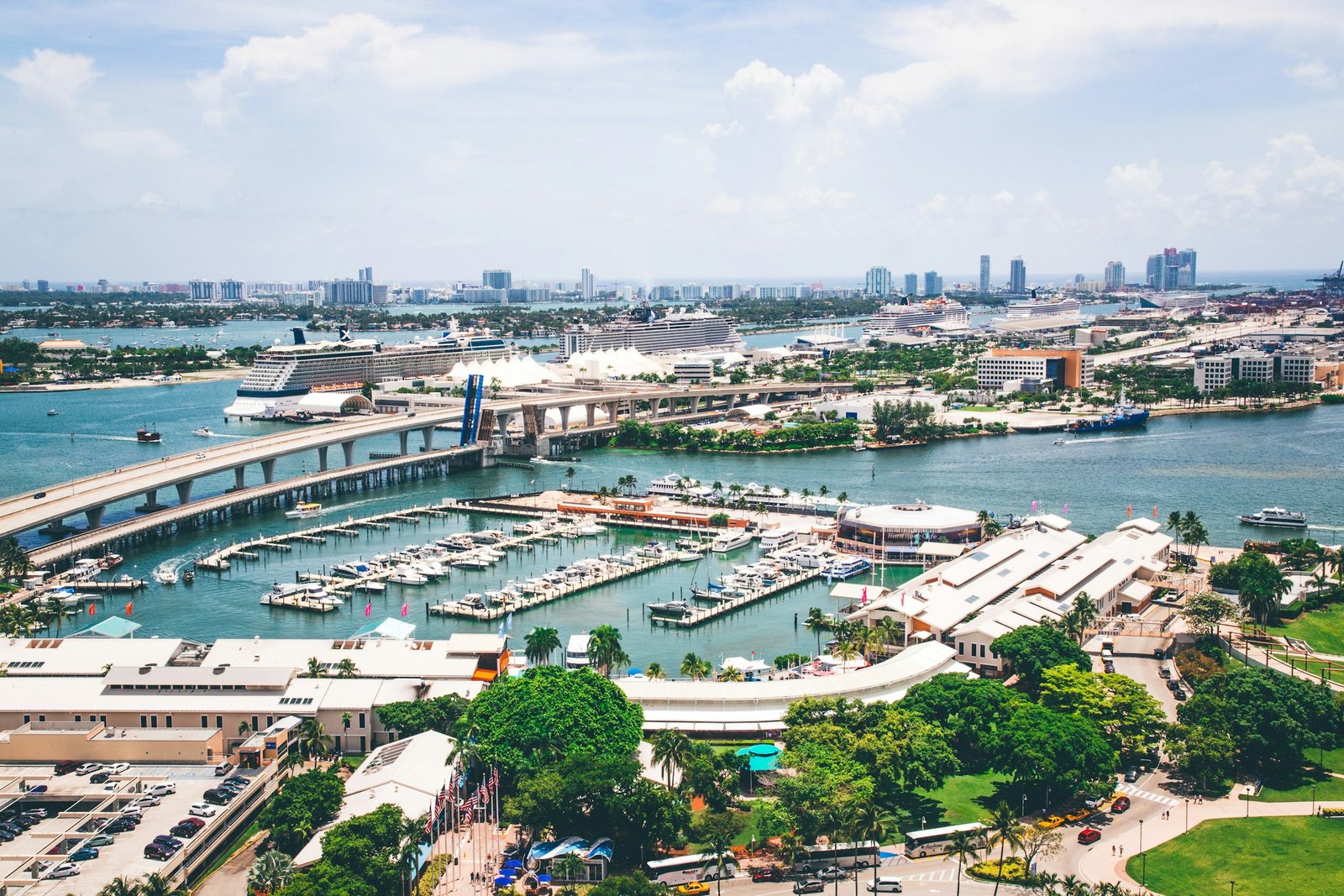
Those who work to connect Poland and South Florida see Miami as a platform where airport, seaport, banks, logistics providers, and legal expertise sit side by side, and where Polish interest is turning into concrete plans: trade shows, pavilions, trade missions, and landmark projects.
A Gateway Built on Infrastructure
The case for Miami starts with what is already in place. “Our greatest advantage is our world-class infrastructure,” says Ivan Barrios, President & CEO of World Trade Center Miami. Miami International Airport leads the U.S. in international freight, PortMiami connects the hemisphere by sea, and a dense network of banks, freight forwarders, and professional firms sits around both. What sets Miami apart, Barrios adds, is how the pieces work together: “the strong collaboration among our business community, economic development organizations, airport, and seaport.”
Alice Ancona, the Center’s Chief Operating Officer, points to the scale of Miami-Dade, home to 2.8 million residents, more than half of them foreign-born.
“A lot of the product that goes into Latin America connects through Miami one way or another, because of our capabilities and our access to the region, particularly by air cargo.” Alice Ancona, Chief Operating Officer, World Trade Center Miami
For Leszek Ladowski, President of the Polish American Chamber of Commerce of Florida and the Americas, Miami’s advantage rests on three pillars: transportation, distribution, and professional services. Add Florida’s economy, which the Florida Chamber Foundation ranks as the world’s 14th largest if the state were a country, and the picture is complete. Miami’s strategic position between North America, Latin America, the Caribbean, and Europe, he says, “makes it much more than a regional business center.”
A Community Building the Bridge
Behind the infrastructure stands a Polish presence that has been growing for decades. According to the 2023 American Community Survey, over 8.2 million Americans reported Polish ancestry, and those roots now reach into South Florida’s business community. The Polish American Club of Miami (PACOM) has been part of the city for almost 90 years.
“Our mission is to unite the Polish community, promote heritage, and strengthen business and cultural ties across the Americas.” Chris Kruszelnicki, President, Polish American Club of Miami (PACOM)
The Club’s most ambitious project looks to the future. The White Eagle Polonia Center, a planned eight-story, mixed-use landmark, is designed to bring institutions from Poland and the Americas under one roof. Kruszelnicki says the Club has approved the Polish architectural firm Moon Studio for the design, and that the project is in its planning and development phase. He adds that it is meant to give Polish institutions a permanent home and to host delegations and trade missions.
Where the Trade Is Already Moving
Polish flights and Polish products already reach South Florida, and the next steps are taking shape in food, aerospace, and manufacturing. “LOT Polish Airlines operates the only nonstop flight between Miami and Warsaw, carrying both passengers and air cargo,” Ancona notes.
Food and beverage is the clearest meeting point. “Poland is one of the top sources of caviar imported into South Florida to serve our restaurants,” Ancona says, “and that trade is growing quickly.” Poland’s National Support Center for Agriculture (KOWR) visited the World Trade Center’s America’s Food and Beverage Show this year, she adds, while exploring a Polish pavilion for 2027.
Aerospace and defense is the next chapter. Barrios notes that World Trade Center Miami launched Aerospace Defense Americas in July. Gary Goldfarb, Senior Advisor at Allyo Global Logistics and Chairman of the Board of World Trade Center Miami, sees South Florida becoming a natural base for Poland’s defense industry.
“[South Florida is becoming] the primary aerospace and defense nucleus for the hemisphere.” Gary Goldfarb, Senior Advisor, Allyo Global Logistics & Chairman of the Board, World Trade Center Miami
Then comes the practical toolkit. South Florida is also home to three of the country’s 15 top foreign-trade zones, according to a 2023 report to Congress. Goldfarb explains that goods entering a U.S. Foreign Trade Zone pay no duties upfront, and duties on inventory sold domestically are paid up to 45 days after the sale, which he says can create a six-to-eight-month cash flow advantage.
For companies that decide to produce in the United States, Michael Kesti, Chairman of the Government Relations Group, sees a wide field of support. His firm helps foreign companies that want to manufacture in the U.S. secure the best incentive packages by getting states to compete for each client. Miami is where that planning can begin, in what Kesti calls Florida’s “hyper-efficient launchpad” for the Americas.
“There are far more federal economic incentives, tariff reliefs, and trade exception mechanisms available in the United States than most international business owners realize.” Michael Kesti, Chairman, Government Relations Group
Beyond the Summit
“We are very optimistic about the future of trade and investment between Poland and the Americas,” Barrios says, pointing to growing interest among Polish companies in the Western Hemisphere. Ancona sees room beyond air cargo: as Baltic Sea trade grows, she wants Miami to be part of those shipping routes by ocean as well.
Ladowski, who relocated his own business from Venezuela to Miami in 1992, urges Polish entrepreneurs to look abroad earlier, rather than waiting for their home market to saturate, and to arrive prepared: “Enter with a defined strategy, reliable local relationships, and a clear understanding of your competitive advantage.” He also follows Poland’s Central Communication Port project closely. His own motto sums up the Miami pitch: “If you are not in Miami, your competition does not have competition.”
“The real measure of success will not be the number of diplomatic meetings or public declarations. It will be the business relationships, investment projects, and commercial agreements that follow.”Leszek Ladowski, President, Polish American Chamber of Commerce of Florida and the Americas
When the G20 delegations leave Miami, the test will be what stays behind. If the plans described here move forward, a Polish pavilion and a Polonia Center, Miami may be remembered as more than a summit host. In Barrios’s words, the goal is for Polish companies “to view Miami not simply as an entry point into the United States, but as their strategic gateway to the entire Americas,” he concludes.
