

As Poland’s industrial base expands its global footprint, specialized supply chain strategies and tariff engineering are emerging as critical tools for European exporters entering the Americas. Leveraging U.S. Foreign Trade Zones (FTZs) and South Florida’s rapidly growing trade infrastructure offers Polish corporations a direct pathway to optimize cash flow and scale across the Western Hemisphere.
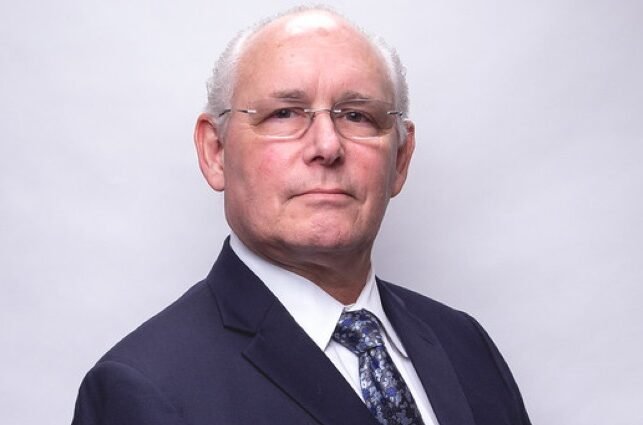
“What I have learned over this lifetime is a fundamental rule: when Poland grows, its entire neighboring network grows along with it,” says Gary M. Goldfarb, Senior Advisor at Allyo Global Logistics (formerly Interport Logistics).
A Global Trade Pioneer
Operating in the global trade and logistics sector since 1972, Goldfarb is widely recognized as the structural architect behind the expansion of modern U.S. Foreign Trade Zones. Having managed major public freight forwarders, conglomerates, and large-scale infrastructure projects such as Airbus Industries across Europe and the United States, he currently serves as Chairman of the Board of the World Trade Center Miami. He also serves as Senior Advisor and Chief Strategy Officer for Interport Logistics, which is undergoing a comprehensive global rebranding into Allyo Global Logistics as part of an integrated supply chain network spanning 14 companies across 9 countries.
Unlocking Cash Flow Through U.S. Foreign Trade Zones
While international tariffs remain an unavoidable reality for global exporters, U.S. Foreign Trade Zones serve as a high-impact financial instrument for European businesses. When foreign merchandise arrives into an FTZ, zero duties are paid upfront.
For inventory sold domestically within the United States, customs duties are reported and paid up to 45 days after the final sale is completed. Because companies typically maintain a continuous rolling inventory, this mechanism creates a six-to-eight-month cash flow advantage, enabling exporters to collect revenue from American buyers long before paying tariffs to the federal government.
“They bring in select components from Europe, blend them with local U.S. components inside a certified clean room, and exit the zone with a completed product legally labeled ‘Made in the USA’—incurring zero tariffs.” Gary M. Goldfarb, Senior Advisor at Allyo Global Logistics
Tariff Engineering and “Made in the USA” Manufacturing
Beyond duty deferral, the highest competitive advantage of an FTZ lies in conducting assembly or manufacturing directly inside the zone. Goldfarb highlights the example of a medical conglomerate that imports specialized orthopedic surgical components from Europe, blends them with American components inside a certified clean room within an FTZ, and exits the zone with a finished product legally labeled “Made in the USA” with zero tariff liability.
Polish manufacturers producing high-precision automotive parts, industrial machinery, and electronics can utilize this exact framework—shipping European components directly into U.S. zones for final assembly into finished American systems.
High-Potential Pipelines and South Florida’s Defense Nucleus
Goldfarb identifies substantial growth pipelines for Polish industrial machinery, medical devices, advanced components, and pharmaceuticals entering the U.S. market. Consumer goods also see strong demand through platforms like America’s Food and Beverage Show—organized annually by the World Trade Center Miami—where buyers from Northern South America, Central America, and the Caribbean source their annual inventory. Poland’s standout exhibition footprint at the show underscores the robust hemispheric appetite for Polish exports.
Simultaneously, South Florida is rapidly emerging as a primary aerospace and defense nucleus for the Americas, offering an ideal geographic base for Poland’s expanding heavy defense industry to establish a North American presence.
Scaling Through Crisis and Looking Toward the Miami G20
Goldfarb’s strategic philosophy relies on counter-cyclical expansion. During the COVID-19 pandemic, while much of the corporate sector downsized, Goldfarb accelerated growth across his organizations—tripling the World Trade Center Miami’s annual operating budget, expanding the Beacon Council’s economic reach, and transforming Interport Logistics from a single localized facility into a 14-company, 9-country global enterprise.
Looking ahead to the upcoming G20 Summit in Miami, Goldfarb views the forum as a pivotal stage for forward-looking Central European enterprises. Through the World Trade Center network and direct connections with regional leaders such as Ivan Barrios, his team is positioned to connect Polish technology, aviation, and aerospace delegations with key decision-makers across the Americas.