

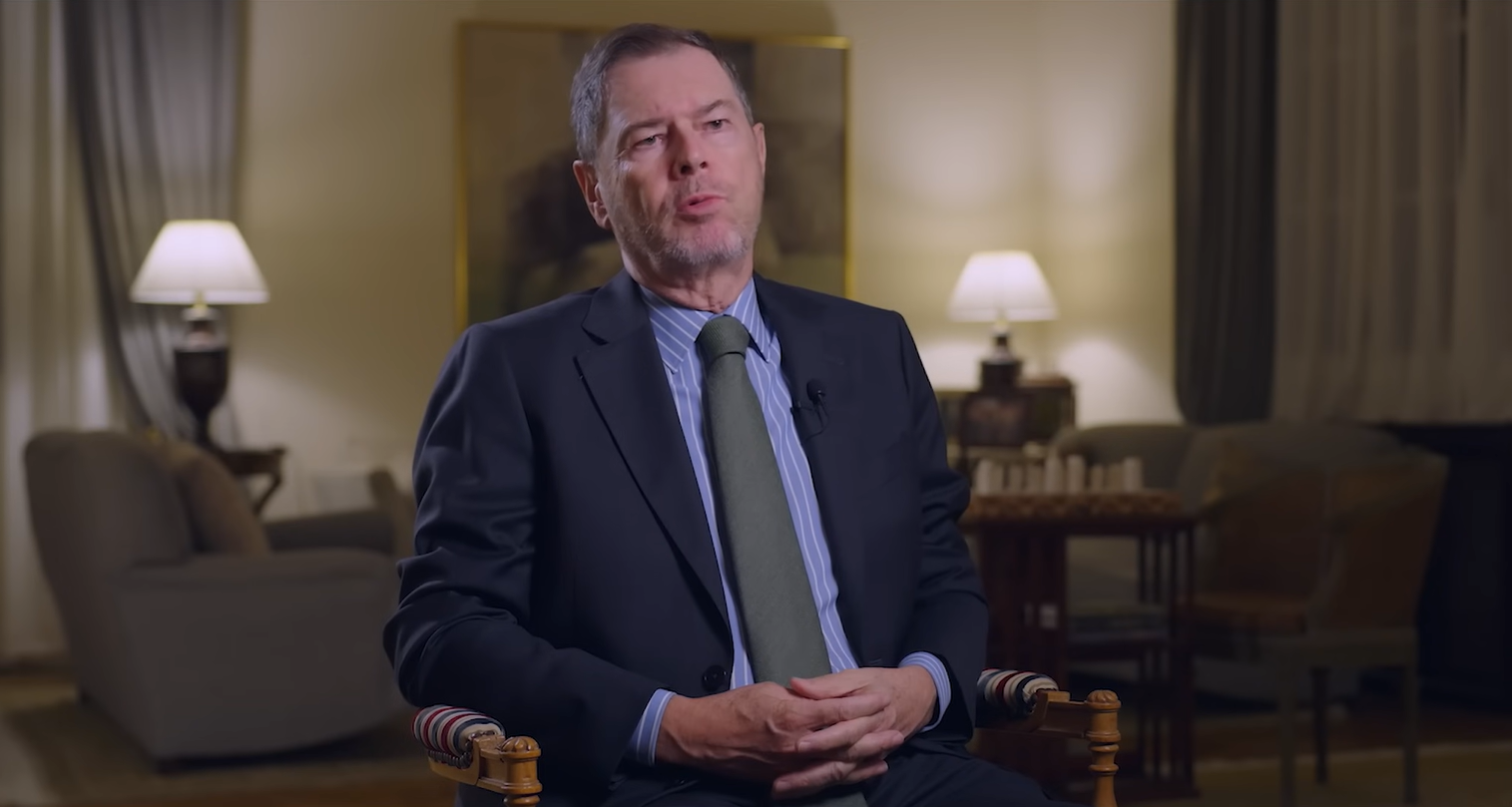
Egypt continues to strengthen its position as a strategic economic and geopolitical hub linking Africa, Asia, and Europe, according to H.E. Álvaro Iranzo, the ambassador of Spain to Egypt, who highlights the country’s long-standing historical significance, economic scale, and ongoing reform trajectory.
In this exclusive interview, the Ambassador discusses Egypt’s macroeconomic transformation, structural reforms, international financial support, infrastructure development, and the growing presence of Spanish companies in the Egyptian market.
Egypt’s Unique Geopolitical and Historical Position
Ambassador Iranzo describes Egypt as one of the world’s most strategically located countries, benefiting from its position at the crossroads of three continents.
“Egypt is a great country with a privileged location in the heart of the Middle East,” he explains, “straddling Africa, Asia and very close to Europe.”
He emphasizes that Egypt is not only geographically significant but also historically unique, with a civilization that has existed for thousands of years, making it one of the world’s most enduring nation-states.
“It’s a very old country with a civilization that has been ongoing for thousands of years,” he says.
For Iranzo, Egypt’s combination of historical continuity and geographic connectivity gives it a distinctive role in regional and global affairs.
Economic Growth and Structural Reform
The Ambassador highlights Egypt’s position as one of Africa’s largest and most important economies, noting its steady growth trajectory in recent years.
“Egypt has one of the most important and largest economies in Africa,” he says. “It is growing and has been growing in a very steady way for a number of years.”
He attributes this performance to ongoing macroeconomic and structural reforms, including efforts to stabilize the local currency and strengthen overall economic resilience.
“Structural adjustments and macroeconomic adjustments have taken place,” he explains, noting that currency stability has improved significantly due to reform implementation.
“Structural adjustments and macroeconomic adjustments have taken place. The local currency has become much more stable thanks to a process of reforms.” H.E. Álvaro Iranzo, the ambassador of Spain to Egypt
Iranzo underscores that these reforms are helping to enhance investor confidence and strengthen Egypt’s long-term economic outlook.
International Financial Support and Investment Flows
A key component of Egypt’s recent economic progress, according to Iranzo, has been its engagement with international financial institutions and strategic investment partners.
He highlights the agreement with the International Monetary Fund (IMF), which provides multi-billion-dollar financial support aimed at reinforcing economic stability and reform implementation.
He also points to major bilateral investment contributions, particularly from Gulf partners, including large-scale investment inflows such as the Ras El Hekma development agreement with the United Arab Emirates.
“These partnerships have provided significant liquidity to the Egyptian economy,” he explains, emphasizing their importance in supporting macroeconomic stability.
Additionally, he notes that improved credit outlooks from international rating agencies have further strengthened Egypt’s attractiveness for global investors.
Spanish Investment and Infrastructure Collaboration
Iranzo also highlights the strong and growing presence of Spanish companies in Egypt, particularly in infrastructure and large-scale development projects.
“Spanish companies are present in the Egyptian market,” he says. “They are participating in numerous infrastructure projects.”
He points to major developments involving Spanish participation, including Egypt’s New Administrative Capital, New Alamein City, and major infrastructure works such as the Ismailia and Port Said tunnels.
These projects, he explains, reflect deepening economic cooperation between Spain and Egypt and demonstrate investor confidence in Egypt’s long-term development strategy.
Egypt as a Tourism and Cultural Destination
Beyond investment and infrastructure, Iranzo highlights Egypt’s importance as a global tourism destination.
He notes that Egyptian tourism remains highly attractive to Spanish travelers, with approximately 300,000 Spaniards visiting the country annually.
“The Egyptian tourist market is much appreciated by Spaniards,” he says.
For Iranzo, tourism serves as both an economic driver and a cultural bridge between Egypt and Europe, reinforcing people-to-people ties alongside formal diplomatic and economic relations.
Closing Perspective
For Ambassador Iranzo, Egypt’s trajectory is defined by resilience, reform, and strategic global positioning. Its geographic location, economic scale, and ongoing reform agenda place it at the center of regional connectivity and international investment flows.
As structural reforms continue and global partnerships deepen, he believes Egypt is steadily reinforcing its role as a key economic and geopolitical hub linking multiple continents and markets.
#AlvaroIranzo #Egypt #SpainEgyptRelations #EconomicReform #InvestmentEgypt #IMF #InfrastructureDevelopment #TourismEgypt #MiddleEastEconomy #AfricaInvestment #GlobalTrade #EmergingMarkets #SIMfilms
