

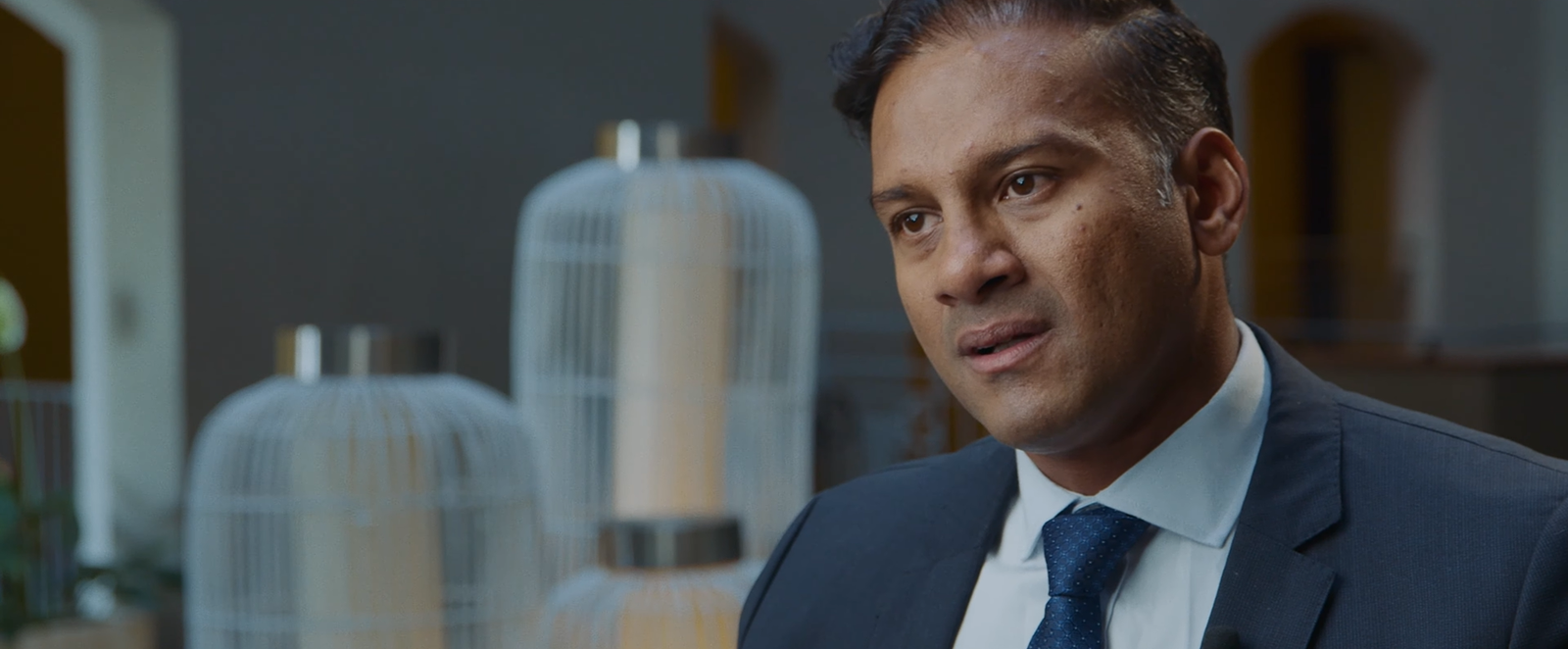
Mauritius stands at the intersection of innovation, finance, and African growth, according to Bilal Adam, CEO of Stewart’s Investment Capital and President of the South African Chamber of Commerce in Mauritius. In this exclusive interview, Adam describes the island nation as one of Africa’s most compelling business destinations, a country combining political predictability, safety, financial sophistication, and emerging technological ambition.
Stability, Safety and Predictability
For Adam, Mauritius’ appeal begins with stability. Having first arrived from South Africa in 2007 for what was meant to be a short six-month stay, he instead built a life and career on the island over the following decade.
“As South Africans, we place a high premium on safety,” he explains, describing Mauritius as one of the safest and most predictable environments on the continent. Beyond security, he points to policy continuity and a pro-business climate that encourages innovation, entrepreneurship, and investment regardless of political shifts.
“Mauritius has a fantastic opportunity to become the Singapore of Africa,” he says, framing the country as uniquely positioned for the next phase of economic transformation.
AI, Productivity and National Strategy
A central theme of Adam’s vision is artificial intelligence and its potential to reshape productivity across the island’s economy. He points to Mauritius’ National AI Strategy and sees significant opportunities for AI adoption in fintech, healthcare, agriculture, public services, and automation. Unlike larger economies struggling with demographic pressures, Mauritius faces a declining population and ongoing brain drain, with many young professionals leaving for cities such as London, Dubai, Singapore, and Luxembourg.
According to Adam, AI can help offset that challenge by increasing the productivity of the people who remain. “AI can help to make those people more productive and can be used as a tool to help enhance GDP,” he explains. He believes emerging technologies could allow Mauritius to access expertise and services that would otherwise require expensive foreign talent, particularly in healthcare and high-skill industries.
His optimism intensified after attending the GITEX technology conference in Dubai, where he observed AI-enabled robotics, autonomous delivery systems, and AI agents capable of handling legal, accounting, and sales functions. For Mauritius, he says, the opportunity lies not only in adopting these tools but in integrating them into the economy quickly enough to create a competitive edge.
Fintech Evolution and Economic Transformation
Alongside AI, Adam sees fintech as the next natural evolution of Mauritius’ economy. He outlines the country’s progression through several economic eras; from agriculture and sugar production to hospitality, manufacturing, textiles, and eventually financial services. Each stage required increasingly sophisticated infrastructure and skill development. The next leap, he argues, is more accessible.
“The next step is fintech. And this is to become the Silicon Valley of Africa.” Bilal Adam, President, South African Chamber of Commerce in Mauritius
He believes Mauritius already possesses many of the foundations needed to become a fintech and digital asset hub, including its international financial center, multi-currency ecosystem, and strong connectivity to African and global markets. Rather than relying on outdated textbook knowledge, Adam argues that success in fintech requires learning through real-time innovation and attracting entrepreneurs already building the future of finance.
That future, in his view, includes digital assets, AI-powered financial systems, and next-generation banking infrastructure. He suggests Mauritius can position itself as a home for globally minded fintech founders while simultaneously creating opportunities for local talent through direct exposure to innovation.
Mauritius as a Cross-Border Investment Hub
Adam also emphasizes the island’s strategic role as a gateway between developed markets and Africa. Through his work at Stewart’s Investment Capital, he sees Mauritius functioning as a hub for long-term infrastructure investment into emerging African markets. Global capital, often denominated in dollars or pounds, flows through Mauritius into projects such as telecommunications infrastructure across the continent.
“We see Mauritius as the hub where money comes from developed markets into emerging markets,” he says, noting that the jurisdiction’s openness to multiple currencies makes it highly attractive for cross-border investment.
Telecom, Connectivity and Financial Inclusion
Telecommunications infrastructure, in particular, is closely linked to his broader vision for AI and financial inclusion. Adam argues that expanding digital access across Africa is essential to ensuring that the benefits of AI are distributed widely rather than concentrated among a small segment of society. Increasing connectivity, he says, creates opportunities for education, entrepreneurship, and economic participation.
Mauritius–South Africa Economic Relationship
The longstanding relationship between Mauritius and South Africa equally shapes his perspective. Adam describes the two countries as deeply interconnected economically, socially, and culturally, with strong trade flows and extensive people-to-people ties. Many Mauritians have studied in South Africa, married South Africans, or built business relationships there, creating what he describes as a foundation of trust that strengthens bilateral commerce.
Chamber Leadership and Community Initiatives
As President of the South African Chamber of Commerce in Mauritius, Adam has focused on building that trust further through inclusion, collaboration, and community engagement. Under his leadership, the chamber has expanded diversity across its board and organized initiatives ranging from economic forums and sustainability discussions to art and culture events designed to deepen cross-community relationships.
Future Vision for Mauritius
For Adam, however, the broader vision extends beyond commerce alone. He sees Mauritius attracting wealth, entrepreneurs, and innovation at a moment when technology is reshaping the global economy. From ambitious concepts such as AI-driven productivity systems to the possibility of gold-backed digital currencies, he believes the island has the agility to experiment with bold ideas while maintaining economic credibility.
“Mauritius is attracting wealth, attracting ideas, and attracting good businesses,” he says. “I think we are part of greater and bigger things here in Mauritius.”
For investors and entrepreneurs considering the island, his message is straightforward: Mauritius offers opportunity, clarity, and momentum. With a business-friendly government, expanding digital ambitions, and growing relevance in African finance, Adam believes the country is entering one of the most important chapters of its economic story.
#BilalAdam #Mauritius #Fintech #ArtificialIntelligence #AfricaInvestment #DigitalTransformation #FinancialServices #FutureOfFinance #AI #InvestmentAfrica #CrossBorderInvestment #TelecomInfrastructure #AfricanEconomy #Innovation #BusinessExpansion #GatewayToAfrica #DigitalAssets #SouthAfrica #SIMfilms
