

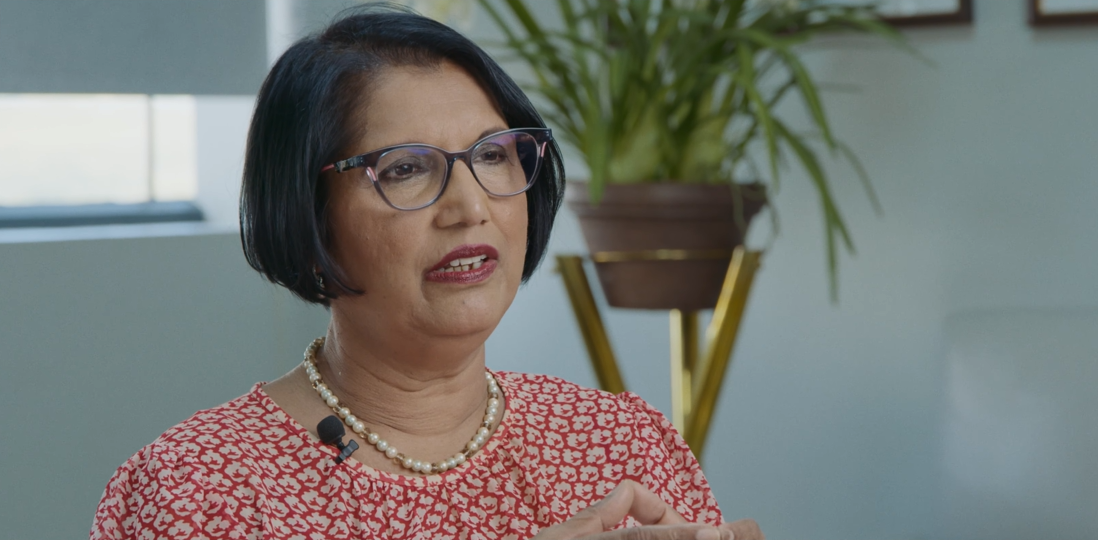
Mauritius is entering a new phase of economic transformation built around resilience, strategic reform, and long-term planning, according to Hon. Jyoti Jeetun, the Minister of Financial Services & Economic Planning, who believes the country is positioning itself to evolve from a middle-income economy into a high-income nation by 2050.
In this exclusive interview, Minister Jeetun discusses Mauritius’ economic outlook, the growing importance of financial services, regulatory reform, FinTech innovation, sustainable finance, and the government’s long-term strategy for inclusive national development.
Economic Resilience in a Challenging Global Environment
Despite significant domestic and international pressures, Jeetun says Mauritius continues to demonstrate economic resilience.
“Growth is projected to be around 3% this year,” she explains. “We think and we feel that this is the sign of the resilience of the Mauritian economy given the context.”
Domestically, Mauritius is undergoing major fiscal reforms and consolidation measures designed to stabilize public debt and strengthen long-term economic sustainability. Internationally, the country faces increasing geopolitical uncertainty, trade disruptions, and external market volatility. All of these carry significant implications for a small island economy heavily dependent on tourism, exports, and financial services.
Given those conditions, Jeetun believes maintaining positive growth reflects the strength and adaptability of the Mauritian economy.
Vision 2050 and Economic Transformation
Central to the government’s agenda, Vision 2050 drives a broader transformation strategy.
Jeetun explains that Mauritius is now transitioning toward a long-term economic development model aimed at transforming the country into a high-income nation over the coming decades.
“We want to plan for the future and plan for the future generation in terms of transforming the country,” she says.
As Minister of Financial Services and Economic Planning, Jeetun oversees both one of the country’s most important economic sectors and the newly re-established Ministry of Economic Planning which was revived after two decades to help guide long-term national development.
According to her, economic planning will play a critical role in building the infrastructure, policies, and institutional foundations necessary for future prosperity.
Financial Services as a Core Economic Pillar
The financial services industry remains one of the strongest pillars of Mauritius’ economy.
Jeetun notes that the sector contributes nearly 14% of national GDP, employs approximately 19,000 people directly in high-skilled positions, and accounts for a substantial share of corporate tax revenues.
“The sector pays 68% of corporate tax,” she explains, underscoring its importance to the national economy.
Over the last three decades, Mauritius has developed a sophisticated financial services ecosystem supported by a highly educated workforce, an extensive treaty network, and a growing reputation for regulatory credibility and operational efficiency.
Building a Competitive International Financial Centre
“We have 30 years of very strong experience,” she says.
Mauritius currently maintains 46 Double Taxation Agreements (DTAs) alongside numerous Investment Promotion and Protection Agreements (IPPAs). These help position the jurisdiction as a leading gateway for cross-border investment into Africa and other emerging markets.
The country’s recent progress in the Global Financial Centres Index (GFCI) reflects those efforts. Mauritius recently climbed six positions to rank 52nd globally. It is now recognized as the top-ranked financial center in Africa.
According to Jeetun, that progress reflects not only successful branding and promotion, but also substantial work around competitiveness, infrastructure, governance, and ease of doing business.
Regulation, Compliance and Financial Security
For Jeetun, maintaining a robust regulatory environment is equally important as promoting growth.
She highlights the increasing global focus on cybercrime, anti-money laundering frameworks, and counter-terrorism financing regulations, noting that Mauritius has invested heavily in strengthening compliance systems following its removal from the FATF grey list several years ago.
“We have to balance compliance with ease of doing business and growth
”
Hon. Jyoti Jeetun, the Minister of Financial Services & Economic Planning
 ”
”Jeetun emphasizes that regulators, enforcement agencies, and government ministries are working together to ensure Mauritius remains both internationally compliant and commercially attractive.
The goal, she says, is to maintain Mauritius’ reputation as a secure, transparent, and well-regulated international financial centre while avoiding excessive bureaucracy that could discourage investment.
Collaboration and the Financial Services Strategy 2025–2030
Collaboration remains a central element of Mauritius’ development model.
“Mauritius success has been built on collaboration,” Jeetun says, highlighting cooperation between government, private sector stakeholders, investors, academia, and civil society.
Since taking office, she has led broad consultations across the industry to shape a new five-year roadmap for the financial services sector titled Rethinking the Future of the Financial Services Industry 2025–2030.
The strategy revolves around five key pillars:
- Ease of doing business
- Market diversification
- Product diversification
- Branding and promotion
- Talent development and upskilling
According to Jeetun, these priorities strengthen Mauritius’ competitiveness and prepare the country for future industry shifts.
FinTech, ESG and Emerging Opportunities
Technology and innovation are expected to play an increasingly important role in Mauritius’ next phase of financial sector growth.
Jeetun points to the emergence of successful FinTech startups specializing in blockchain, digital payments, and financial technologies. She also notes that the Financial Services Commission is actively developing legislation and regulatory frameworks to support these industries.
“FinTech is emerging as a strong subsector,” she explains.
At the same time, Mauritius is also positioning itself as a destination for sustainable finance and ESG-focused investment funds.
The Financial Services Commission recently introduced ESG guidelines for investment funds as part of a broader effort to attract sustainable capital flows into Africa.
“We would like to position Mauritius as the place to raise those funds that can go to Africa in sustainable investment,” Jeetun says.
She also identifies wealth management as another key growth opportunity, noting that Mauritius is already home to thousands of millionaires and is actively developing its private wealth ecosystem.
Inclusive Growth and National Prosperity
Beyond financial performance alone, Jeetun emphasizes that Mauritius’ long-term vision revolves around inclusivity and national prosperity.
The government’s strategy, she says, aims not only to strengthen the economy but also to ensure that all Mauritians benefit from future growth.
“We want to make sure that we have planned for the next generation in terms of building Mauritius into a high-income country,” she explains.
That includes creating opportunities for young professionals, building modern infrastructure, improving living standards, and ensuring Mauritius remains welcoming to both local citizens and international investors.
Mauritius as a Business and Lifestyle Destination
For international investors, Jeetun’s message is straightforward: Mauritius remains open for business.
“My message is that Mauritius is open for business, for domestic investors and international investors,” she says.
She describes Mauritius as combining a highly investor-friendly environment with a unique quality of life. This includes political stability, cultural diversity, favorable weather, and a globally connected business ecosystem.
“There’s a very nice balance of having an enabling, investor-friendly business environment with a good lifestyle for investors and locals,” she explains.
For Jeetun, that combination of opportunity, stability, and lifestyle continues to make Mauritius one of the most attractive destinations for international business and investment in Africa.
#JyotiJeetun #Mauritius #FinancialServices #Vision2050 #EconomicTransformation #AfricaInvestment #FinTech #SustainableFinance #InternationalFinance #InvestmentAfrica #ESG #CrossBorderInvestment #EconomicPlanning #WealthManagement #BusinessExpansion #GatewayToAfrica #GlobalFinance #MauritiusEconomy #SIMfilms
