

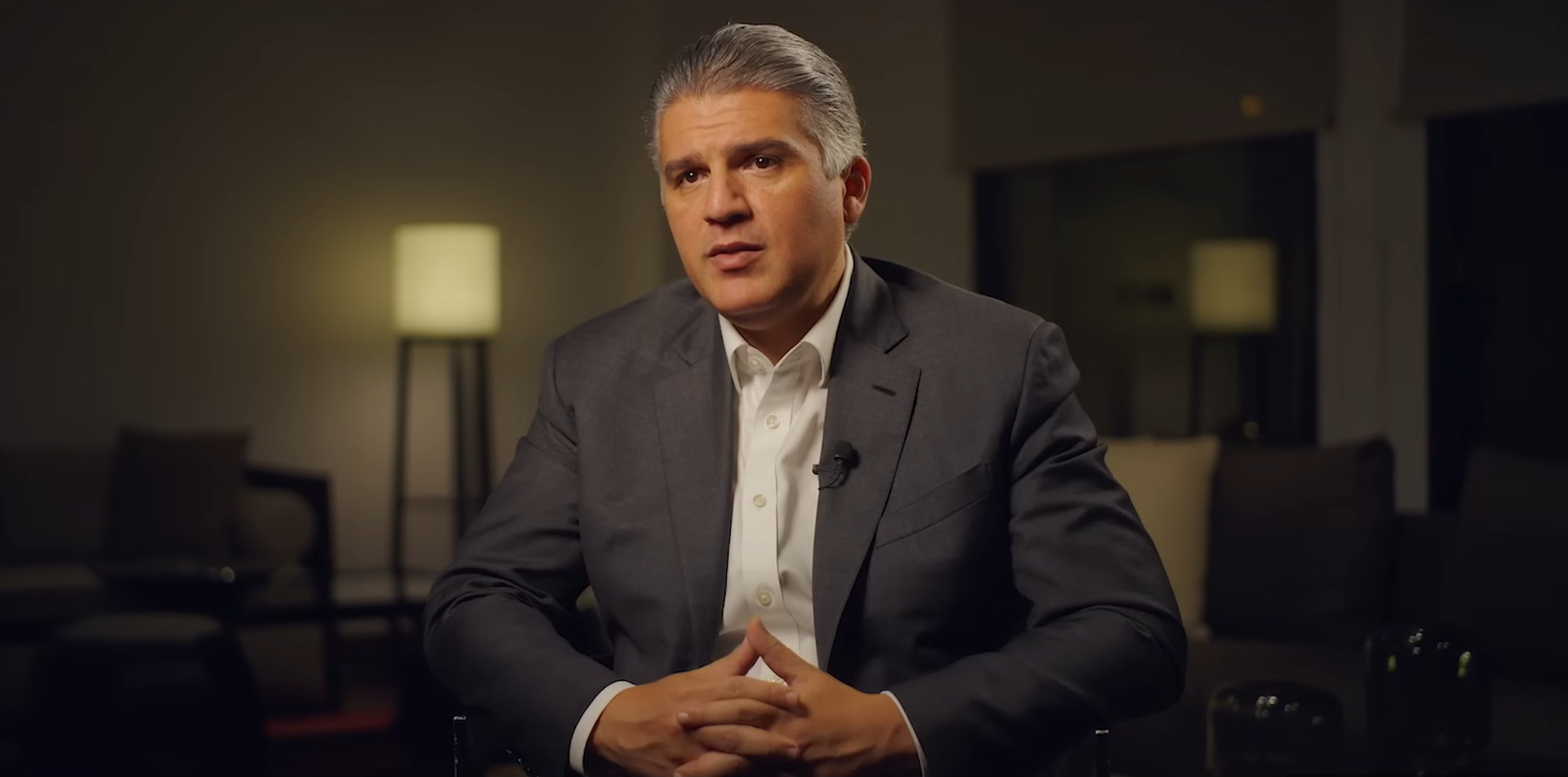
Egypt’s transformation over the past decade has created a new generation of infrastructure expertise, according to Hassan Allam, CEO of Hassan Allam Holding, who says the country is now entering a phase where it can export those capabilities across the region. In this exclusive interview, he explains how infrastructure, private sector empowerment, and long-term investment are shaping Egypt’s next chapter. Not only domestically, but also as a regional development leader.
“The government has been proactive,” he says, pointing to direct dialogue between policymakers and the private sector as one of the key drivers behind Egypt’s economic momentum. For him, collaboration between government and business has been essential in creating an environment where national development projects can move at scale and pace.
Infrastructure at the Core of Egypt’s Growth
As Co-CEO of Hassan Allam Holding, Allam makes it clear that infrastructure remains central to the company’s strategy and to Egypt’s broader economic ambitions.
“As a business that specializes in engineering and contracting, and utility investment and development, large-scale national infrastructure is fundamentally important for us.” Hassan Allam, CEO of Hassan Allam Holding
He describes the group’s integrated approach across engineering, design, contracting, utilities, investment, and development as a major advantage in delivering complex projects that can reshape economies and improve public services.
“These are projects that excite us,” he says, explaining that the company is focused on “value-added projects” capable of transforming landscapes and enhancing the services governments provide to citizens.
He explains that the company consistently focuses on infrastructure opportunities and value-added projects with the potential to transform national landscapes and improve the quality of services delivered by governments to their citizens.
For Allam, infrastructure is not simply about construction — it is about nation building. “Economies develop when national infrastructure is in place,” he says, highlighting the importance of airports, ports, roads, bridges, transportation systems, and water infrastructure in enabling long-term growth and improving quality of life.
Exporting Egyptian Expertise Beyond Borders
A key theme throughout the conversation is Egypt’s growing ability to export expertise developed through its domestic transformation.
“Having been part of Egypt’s transformation in the last ten years, we’ve been able to generate an enormous amount of expertise within our group,” Allam says. “And we now look to export this service regionally.”
He explains that years of working on large-scale national projects have enabled Egyptian companies to develop technical know-how, operational experience, and execution capabilities that are increasingly in demand across neighboring markets.
“Once we’ve been able to generate this wealth of knowledge on our national soil, we now have the ability to export this effectively and efficiently to our neighbors,” he adds.
That expansion strategy is particularly visible in water infrastructure projects, which Allam identifies as a major regional opportunity. The company consistently identifies and follows areas where potable water infrastructure is needed and approaches these projects not only as a contractor, but also as a designer, investor, concessionaire, and long-term operator.
The Grand Egyptian Museum and Tourism Development
Tourism also plays a major role in Egypt’s long-term growth strategy, and Allam highlights the company’s involvement in one of the country’s most important cultural projects: the Grand Egyptian Museum.
“We were successful, and happily so, to be chosen as the operator of the Grand Egyptian Museum,” he says.
For him, the museum represents more than a landmark attraction — it reflects Egypt’s ambition to deliver world-class experiences that strengthen tourism and international visibility.
“Once this museum is fully inaugurated and operational, the world is going to have an experience like no other,” he says.
A Private Sector-Led Future
Allam also emphasizes the growing role of Egypt’s private sector in driving economic development and investment.
“We have people willing to work, capable of working,” he says. “We have a government that is genuinely and truly pushing the private sector forward, helping them to deliver results, helping them to grow, helping them to invest.”
According to Allam, Egypt’s priorities now extend beyond infrastructure into tourism, industry, services, and exports, with the private sector expected to lead much of that growth.
“Egypt now is focused on growing industry, growing tourism, growing services, exporting regardless of industry,” he explains.
Construction as a Strategic Economic Pillar
For Allam, the construction industry remains one of the defining pillars of Egypt’s economy and a major source of future opportunity.
“To discuss the construction industry in general here in Egypt is to discuss a key pillar of the economy,” he says.
He believes continued investment in infrastructure, engineering, and construction capabilities will not only strengthen the domestic economy, but also position Egypt as a regional exporter of expertise and development solutions.
“The more this industry grows and develops and is able to export our historical capabilities and services as a nation, then I think Egypt will be a better place economically,” he concludes.
#HassanAllam #Egypt #EgyptInfrastructure #InfrastructureDevelopment #ConstructionIndustry #EconomicGrowth #PrivateSector #Engineering #WaterInfrastructure #TourismDevelopment #GrandEgyptianMuseum #RegionalExpansion #Investment #MiddleEastBusiness #AfricaBusiness #NationBuilding #UrbanDevelopment #EgyptEconomy #InfrastructureInvestment #BusinessLeadership #CNBCEgypt #SIMfilms
