

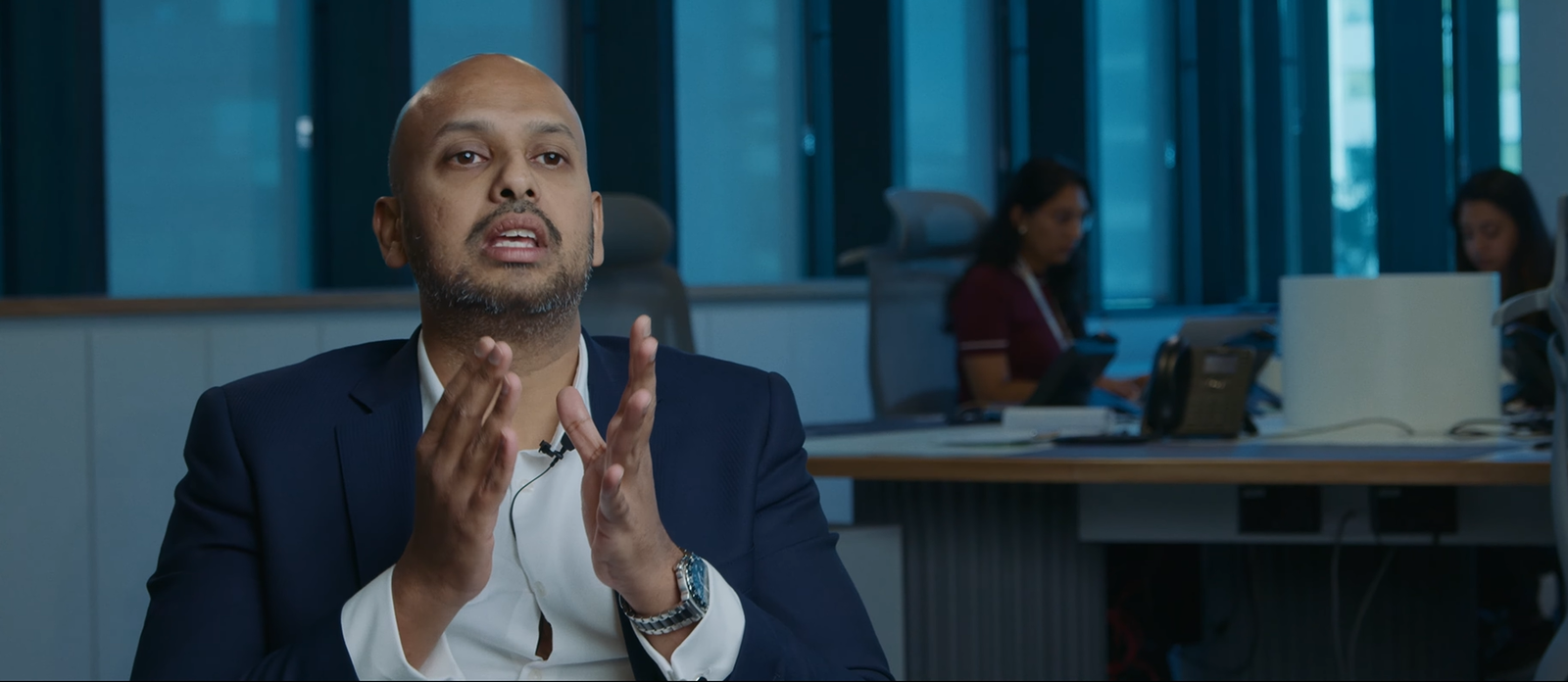
Mauritius has established itself as one of the world’s most trusted gateways for cross-border investment into emerging markets. Faraz Rojid, CEO of Mauritius Finance (MF), believes the island’s success has been driven not only by strong economic fundamentals but also by decades of forward-looking policymaking, legal certainty, and investor-focused reforms.
In this exclusive interview, Rojid outlines how Mauritius transformed itself into a globally respected international financial center through legal modernization, institutional stability, and a strong commitment to international best practices.
Building the Foundations of a Financial Centre
For Rojid, the origins of Mauritius’ success date back to the 1990s, when the country began recalibrating its legal and regulatory framework to position itself as a welcoming destination for international investors.
“I strongly believe that the strong performance of Mauritius as a business hub and as an international financial center lies with the forward-looking policies that have been implemented ever since the 1990s,” he explains.
The adoption of globally inspired legal frameworks was a key component of that transformation. Mauritius integrated elements of British common law, Commonwealth legal systems, and the French civil code tradition, while also introducing legislation inspired by international best practices, including New Zealand’s Companies Act model.
According to Rojid, these reforms created the legal certainty and institutional credibility required for investors to confidently use Mauritius as a launchpad for investments into emerging markets. The country’s retention of the Judicial Committee of the Privy Council as the final court of appeal has also played an important role in reinforcing international confidence.
Investor Confidence and Long-Term Stability
Rojid believes Mauritius has succeeded because successive governments have remained consistently pro-investment and investor-friendly, regardless of political changes.
“The most important thing for an investor is, am I welcome in the country?” he says. “How does your government see me? How does your private sector see me?”
For him, the answer has been clear. Mauritius has developed a reputation for responsiveness, professionalism, and high-quality financial services.
“Mauritius has become the gold standard for fund management, for fund administration, and for funds domiciliation.” Faraz Rojid, Chief Executive Officer, Mauritius Finance
He argues that international investors continue choosing Mauritius because the country offers predictability, quality service, and a sophisticated ecosystem capable of supporting increasingly complex global investment structures.
The Three Pillars of Mauritius’ Financial Sector
Rojid identifies three essential pillars underpinning Mauritius’ global business sector.
The first is cross-border investment structuring — international investments routed through Mauritius into emerging markets. He describes this as a long-standing strength that continues to define the jurisdiction’s role globally.
The second pillar is the fund management and fund administration industry. Mauritius, he explains, has become a major domicile for global funds investing substantial capital into emerging economies. “We are punching way above our belt,” he says, noting that the Mauritian funds industry oversees hundreds of billions of dollars in assets.
The third pillar is private wealth management, which has been expanding rapidly as international investors increasingly seek security, stability, and predictability when managing global wealth structures.
Together, these three areas continue to position Mauritius as a leading financial services hub connecting global capital to growth markets.
Fintech, Virtual Assets and the Future of Finance
Alongside its traditional strengths, Mauritius is also embracing financial technology and digital innovation.
Rojid points to the rapid growth of fintech and virtual assets as a natural evolution of the jurisdiction’s financial services sector. He notes that the Virtual Asset and Initial Token Offering Services (VAITOS) Act has helped ensure Mauritius remains aligned with global technological trends while continuing to strengthen its core financial services offering.
“The future growth will come from a marriage between financial services and technology,” he says.
At the same time, Mauritius continues introducing new structures and products designed to maintain its competitive edge, including the introduction of variable capital companies and other modern investment vehicles.
For Rojid, the strategy is clear: preserve the strong foundations that already work while continuously modernizing to remain relevant in a rapidly evolving financial landscape.
Compliance, FATF Standards and International Trust
Compliance and regulatory credibility remain central to Mauritius’ international reputation.
Rojid emphasizes that Mauritius was among the early jurisdictions to achieve full compliance with all 40 recommendations of the Financial Action Task Force (FATF), particularly in relation to anti-money laundering and combating the financing of terrorism frameworks.
“Mauritius is one of the few jurisdictions very early on that has been ranked 40 over 40 recommendations of the Financial Action Task Force,” he says.
He explains that Mauritius Finance acts as a bridge between the private sector and government authorities, helping ensure that regulators and financial operators work collaboratively to protect the integrity of the financial centre.
According to Rojid, this close cooperation between public and private institutions is one of Mauritius’ greatest strengths. It provides confidence to international investors that Mauritius is committed to maintaining a clean, transparent, and internationally compliant financial ecosystem.
Sustainability and Africa’s Investment Future
Rojid also sees Mauritius playing a major role in facilitating sustainable and impactful investment across Africa.
He argues that sustainability, poverty alleviation, clean water access, and developmental financing are becoming increasingly important priorities for international investors and development finance institutions operating across the continent.
“Mauritius has paved the way to be the trendsetter for that region,” he says, while emphasizing that collaboration with other African financial centres will remain essential.
For Rojid, Africa represents the world’s next major growth frontier — not simply because of its resources, but because of its demographics, creativity, talent, and long-term economic potential.
“You have the world’s youngest workforce and talents in Africa,” he explains. “You have tremendous opportunities.”
Mauritius, he believes, has a pivotal role to play in bridging Africa’s financing gap and channeling quality investment into high-growth sectors across the continent.
Mauritius Finance and National Prosperity
At the center of this ecosystem is Mauritius Finance, the apex organization representing the financial services industry.
Rojid describes the institution’s mission as ensuring excellence in policy advocacy, capacity building, and collaboration between policymakers and the private sector. The ultimate goal, he says, is broader national prosperity.
“The financial services sector is probably the highest grossing sector in our economic architecture,” he explains, noting that the sector contributes roughly 13% of Mauritius’ GDP.
Beyond economic contribution, he says the industry also plays a critical role in creating opportunities for young professionals, developing local talent, and maintaining Mauritius’ global competitiveness.
For international investors, Rojid’s message is direct: Mauritius remains one of the most tested, trusted, and sophisticated jurisdictions for global investment structuring into Africa and other emerging markets.
“If you are looking for a jurisdiction that has the quality and service offering of sophisticated financial services products along with unrivaled service levels, Mauritius would be your go-to destination,” he says.
As global capital increasingly seeks stability, compliance, sustainability, and access to emerging growth markets, Rojid believes Mauritius is exceptionally well positioned to remain a leading gateway for international investment.
#FarazRojid #Mauritius #FinancialServices #AfricaInvestment #CrossBorderInvestment #FundManagement #PrivateWealth #Fintech #VirtualAssets #SustainableFinance #InvestmentAfrica #EmergingMarkets #InternationalFinance #FATF #Compliance #MauritiusFinance #GlobalBusiness #AfricanEconomy #SIMfilms
