

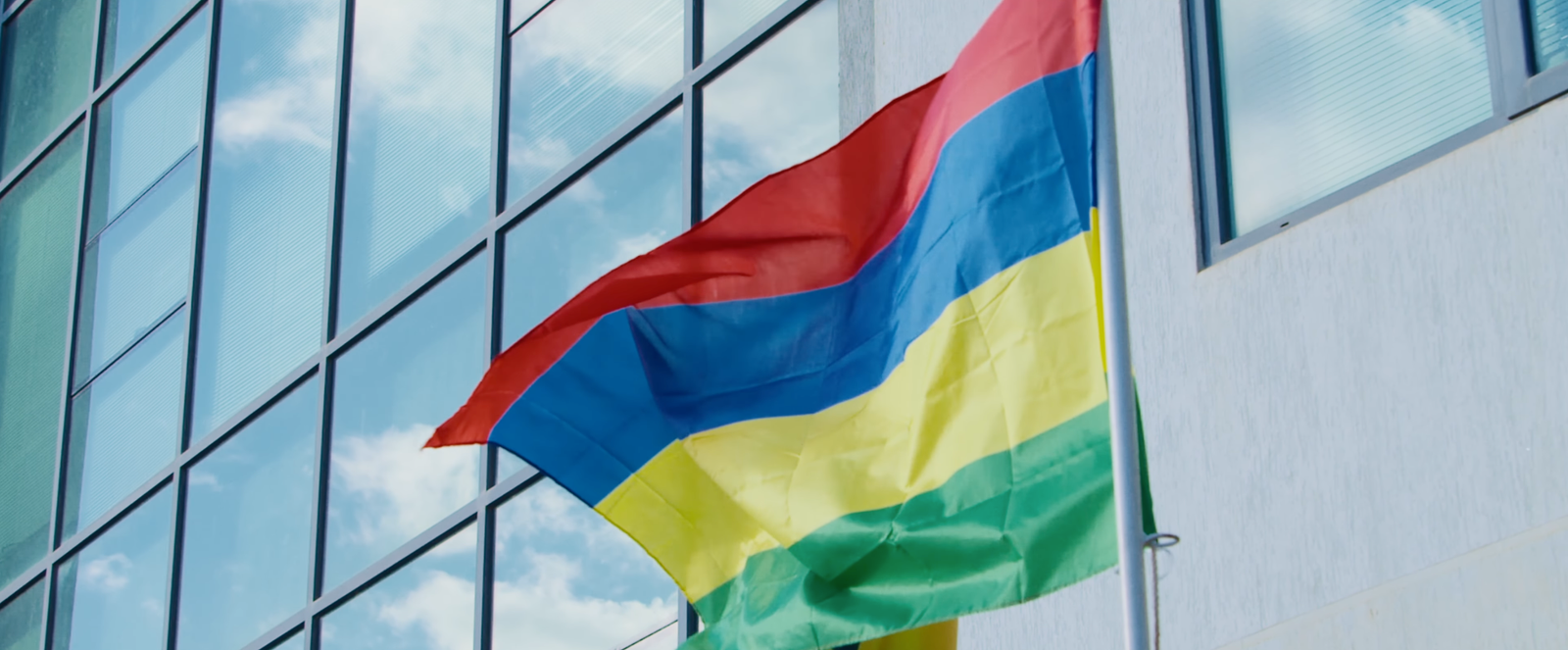
Mauritius likes to say it has “no natural resources – except its people,” yet it is now openly targeting high‑income status by 2030. GDP per capita has climbed from roughly 300 dollars at independence in 1968 to an estimated 15,700 dollars in 2025, with growth around 3.4 percent projected for FY2026/27. Today, the island functions as Africa’s leading international financial centre, structuring about 40 billion dollars of continental investment, retaining an investment‑grade Baa3 rating from Moody’s, and consistently ranking among the top three African countries for quality of life.
That ascent, from sugarcane fields to fintech hub, medical tourism destination, and regional knowledge centre, reflects how Mauritius has used policy to reshape its economic model. Targeted reforms in regulation, education, connectivity, and diversification have helped turn geographic constraints into strategic advantages and positioned the island as a reference point for wider African development ambitions.
Financial hub strategy: rules, trust and Africa‑focused expansion
Mauritius’ journey to high‑income status runs in a pivotal part through its International Financial Centre (IFC), now recognised as Africa’s most competitive financial hub and ranked 52nd globally in the Global Financial Centres Index. This is underpinned by a trusted legal framework, business-friendly reforms, a bilingual and skilled workforce, and a regulatory regime with the highest international standards.
As Hon. Jyoti Jeetun, Minister of Financial Services & Economic Planning explains, “the foundation of a center like Mauritius lies also in a very strong regulatory environment. We have to balance compliance with ease of doing business and growth.
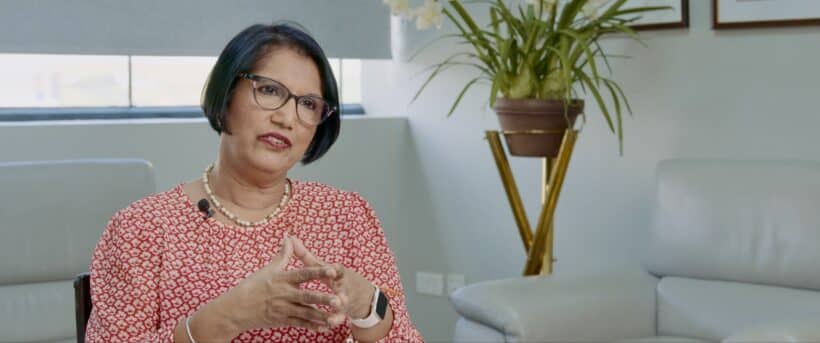
Financial services contribute a growing share of GDP, supported by firms spanning banking, asset and wealth management, fund administration, insurance and advisory. The banking sector stands out as the most advanced and internationally connected in Sub-Saharan Africa, channeling significant flows of FDI into the continent. It is reinforced by over 45 double taxation agreements and Mauritius’ membership in AfCFTA, COMESA and SADC, being the only African country with trade agreements with China and India.
“Cross-border PEVC investments for Mauritius have been one of the cornerstones of the financial services sector. With the jurisdiction experiencing a gradual diversification of markets and a rising global interest in Africa, we do see a rise in Africa-focused funds, investments and treasury solutions,” Hajrah Sakauloo, CEO, HSBC Mauritius observes.

Faraz Rojid, CEO of Mauritius Finance, the flagship body representing the global business industry and financial services sector, emphasises how “global funds domiciled in Mauritius and are investing remarkable amounts of capital in emerging markets. We are punching way above our belt when it comes to the asset and the management of our funds industry, maybe $200 billion or more.”
Mauritius is deliberately moving up the value chain, with a five‑year financial services strategy targeting higher‑value activities including virtual assets, fintech sandboxes and ESG products. “We developed in Mauritius quite good financial expertise, and not only in banks, but tax, legal, regulatory,” Thierry Hebraud, CEO of MCB Group remarks. “We are developing more and more capacity on EKAC, digitalization and digital payment,” he adds.
Family Offices and Arbitration: One-Stop Jurisdiction
Mauritius offers one-stop financial and corporate services firms that streamline business setup and scaling, turning the island into a launchpad for global operations. Sanjeev Gopaul, CEO of the financial and corporate services firm Credentia International, notes that “Mauritius also has very interesting legislation for the family offices. Around them, we have international banks, local banks, good investment managers, asset managers, and the whole ecosystem to complement the family office.”
“One of the things that have been highlighted is a unique e-licensing platform, which will be linked to the KYC central depository, and that will help to treat applications on a real-time basis”, Shamima Mallam-Hassan, MD of Trident Trust mentions.
A preferred jurisdiction for dispute and arbitration, Mauritius is known for its stability and rule of law, with a legal framework that blends Anglo‑Saxon Common Law and the French Civil Code. As Priscilla Balgobin‑Bhoryul, Senior Partner at Dentons in Mauritius, remarks, “if a company is incorporated in Mauritius, the choice of law can be Mauritius. Our ultimate Court of Appeal is the Privy Council,” she adds.

From sugarcane to skills: diversification, green growth and human capital
Mauritius’ success also rests on a deliberate policy of diversification. The country has developed strong pillars in export‑oriented manufacturing, tourism, and ICT, while nurturing new STEM fields and knowledge services.
“There’s a document that is being passed around about AI, where Mauritius wants to plan how it will adopt AI into some of the sectors: fintech, agriculture, health care, public sector, automation,” Bilal Adam, President of the South African Chamber of Commerce in Mauritius points out.
Hon. Kaviraj Sharma Sukon, Minister of Tertiary Education, Science & Research, underscores that the number of universities is increasing, and prestigious international institutions are being attracted through collaboration programs, aiming to create a regional knowledge hub. “We are promoting research and biotechnology. One of our universities has been in fact conducting research in biotech and they’ve been publishing a number of research papers.” As Sukon indicates, there is also ongoing research on DNA sequencing for medical purposes, taking advantage of the island’s genetic diversity.

Vision 2030 increasingly integrates sustainability in industrial policy – from sugarcane‑based bioethanol to incentives for green buildings. This allows firms to compete as “green credentials” become a prerequisite for trade and investment.
For an island nation, commerce and connectivity are lifeblood. Modern ports, airport facilities, logistics platforms and the Freeport regime serve as a global transshipment and distribution node. The latter offers streamlined customs, bonded warehousing and added‑value processing capacities for regional exports in agri‑foods, textiles, pharmaceuticals and industrial goods.
“The free port and the port is one of the best in the Indian Ocean. It is very attractive because they have some specific rules to do business and to send goods from Mauritius into other countries,” Patrick Morin, President of the Chamber of Commerce and Industry France-Maurice comments.
Beyond sun and sand: wellness, medical tourism and quality of life

Mauritius built its global image on white‑sand beaches and lagoon‑front resorts, but its tourism strategy now intentionally folds wellness, medical, cultural and eco‑tourism into the value chain. High‑end clinics, aesthetic surgery centres and specialised hospitals are creating year‑round demand while supporting the local health ecosystem.
In regards to healthcare, Kumar Gunness, General Manager of the pharmaceutical firm Unicorn, stresses how resilient the sector is proving to be. “It is growing in the pharmacy industry itself. We are introducing a lot of new technologies for treatment of cardiovascular diseases and other diseases.”

“Patients are seeking advanced treatment combined with wellness and lifestyle. Mauritius is the ideal place to provide this.” Raphael Bax, Director of the Centre de Chirurgie Esthétique de L’Océan Indien, elaborates. “Mauritius brings together international medical expertise, cutting-edge technology and multilingual culture. So, it’s a safe choice destination for personalized patient care.”
Luxury resorts, boutique retreats and global hotel brands continue to thrive, pivoting toward sustainability and integrating customer‑centred hospitality, spa and fitness offerings, and locally rooted food and cultural experiences into a more resilient sector. Beyond hospitality, Mauritius is also curating unique experiences that span arts, interactive historical and leisure landmarks, sports and cuisine, drawing on its rugged landscapes, crystal-clear coral reefs, sanctuary ecosystems and cultural diversity.
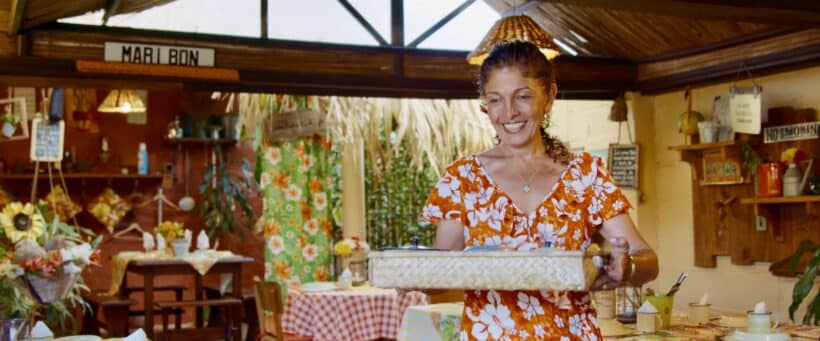
Marie-Christine Forget, a devoted restaurateur running an iconic local cuisine venue inland, is passionate about Creole food. “It is the mixture of what we’ve got from Europe, from Africa and from India,” she warmly shares. “And when you come here, you will have a taste of all the world.
Sanjiv Ramdamee, CEO, Maradiva Villas Resort & Spa, indicates, “you also have different kinds of weather, let’s say. For example, in the southeast and southwest, you have a lot of wind, so that people do kite surfing and such activities there because of the wind.
As Dany Chung, President of the Chinese Business Chamber Mauritius, notes “if we look at the statistics in Mauritius, we can see more and more expatriate people.” He points out that “Offshore companies are doing very well”, but investors “not only come here for business, but also for quality of life.”
A small island with outsized ambitions
Mauritius has evolved from sugarcane fields into Africa’s leading financial centre and a diversified services hub, showing how a small island can turn scale into agility and geography into advantage. By doubling down on skills, connectivity, sustainability and rule of law, the country is positioning itself to reach high‑income status by 2030 and to anchor a new generation of capital, talent and ideas flowing into Africa and across the Indian Ocean.
#Mauritius #HighIncome2030 #MauritiusVision2030 #BusinessExpansionInMauritius #BizExpansion #MauritiusEconomy #AfricaFinancialCentre #InvestInMauritius #FintechMauritius #SustainableGrowth #SDGsMauritius #MauritiusBusinessOpportunities #FinancialHub #ICTMauritius #BPO #RenewableEnergyMauritius #BiotechMauritius #MedicalTourism #WellnessMauritius #TourismMauritius #MauritiusDocumentary #VisionForHighIncomeAfrica #SIMFilms #Africa2030 #IndianOceanHub #QualityOfLife #ResidencyInMauritius #GlobalBusinessHub
